BIOFECTOR Project



BIOFECTOR Research DocumentBIOFECTOR Final Report
BIOFECTOR & Universität Hohenheim
BIOFECTOR & European Commission
BIOFECTOR auf Youtube
Reducing mineral fertilizers to improve soil and produce
Conventional agriculture relies on regular and liberal applications of artificial mineral fertilisers containing essential plant nutrients, especially nitrogen and phosphorus. Nitrogen fertilisers are made from atmospheric nitrogen, which is converted to ammonium using the energyintensive Haber-Bosch process, while phosphorus fertiliser is made by treatingmined phosphate rock with sulphuric acid. Apart from the high energy cost of producing these fertilisers with limited natural resources, harm is also caused to the environment by their application. Only about half of nitrogen fertilisers and 20 per cent of phosphate fertilisers are taken up by crops. Most of the remainder is immobilised, runs off into waterways, isleached into groundwater or lost in gaseous form. The liquid leachate causes pollution of groundwater sources and leads to the eutrophication of rivers, lakes and coastal zones, thereby reducing biodiversity and producing toxic algal blooms. Because of these damaging effects, many regions - including Europe - are introducing legislation to reduce the use of mineral fertilisers.
In response to the need to maintain crop yields whilst reducing artificial inputs, a number of projects are being funded by the European Commission to investigate more natural ways of sustaining agricultural production. BIOFECTOR (Resource preservation by application of bio-effectors in European crop production) is a major project investigating the use of bio-effectors (BEs) to improve the ability of crops to utilise nutrients from both artificial and natural fertilisers. Coordinated by the University of Hohenheim in Germany and benefiting from the dedicated project management skills of consultancy company CMAST, the project comprises a consortium of 21 industrial and academic partners BIOFECTOR is now approaching the end of its five-year duration, in which it has tested the effects of 36 BEs in over 150 laboratory and field Experiments.
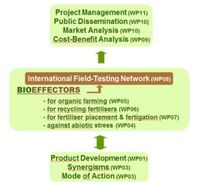
BIOFECTOR Project Structure
WP01: Product Development
WP02: Synergisms and Product Combinations
WP03: Functional Mechanisms
WP04: Abiotic Stress
WP05: Organic Farming
WP06: Recycling Fertilisers
WP07: Fertiliser Placement
WP08: International Field Testing Network
WP09: Economic Evaluation
WP10: Training and Public Dissemination
WP11: Project Management
The major tasks of this work package comprise the administrative management of the project and supporting the coordinator and participants in all aspects regarding the scientific management of the project according to the EC regulations, including reporting, contractual duties, management of financial resources, publication plan, capture and protection of intellectual property. The WP will provide an efficient web-based communication infrastructure to foster the integrative activities within the consortium and to facilitate reporting and administrative processes. Linked with WP10, an additional field of activities is the dissemination of knowledge produced within the project to the relevant target Groups.
BIOFECTOR Participants:
P 01: University of Hohenheim (UHOH)
The research lines covered by this group comprise molecular characterisation of nutrient uptake and regulatory aspects of root growth and root physiology. The rhizosphere research team lead by Prof. Dr. Günter Neumann has an outstanding reputation in the characterisation of root secretions and adaptive root-induced modifications of the root-soil interface (rhizosphere) as key factors for plant nutrient acquisition, with special emphasis on phosphate and micronutrients. Competence in bio-effector research is reflected by a long-lasting 20-years history of industrial research co-operations, with focus on the fate and function of bio-effectors to reduce fertilizer input.
P 02: Julius Kuehn-Institute Federal Research Centre (JKI)
The “Julius Kuehn-Institute (JKI)” is an independent research institution subordinated to the “Federal Ministry of Food, Agriculture and Consumer Protection”. Its main task is to advise the German Federal Government concerning issues of crop production, soil science, plant breeding, plant protection, plant health and biological safety.
P 03: Czech University of Life Sciences (CULS)
Tasks:The major field of expertise of the working group headed by Prof. Dr. Pavel Tlustos is the production and testing of plant-growth promoting bio-effectors based on compost extracts and humic acids as a contribution to WP01 (product development), as well as compost production technology. In WP06 the respective composts will be tested as recycling fertilisers based on organic waste products, including in combination with microbial and non-microbial bio-effector products, to increase the fertiliser quality of the composts and plant nutrient availability. The application potential of the newly developed bio-effector-recycling fertiliser combinations will be tested in organic farming Systems (WP05) and also for fertiliser placement close to the roots to increase their utilisation Efficiency (WP07). The working group is also partner of the BIOFCTOR International Field Testing Network (WP08) providing field sites for standardised testing of the most promising bio-effector products developed within the Project.
P 04: Banat’s University of Agricultural Sciences Timisoara (BUAS)
Banat’s University of Agricultural Sciences and Veterinary Medicine from Timisoara is a state higher education institution that has the didactic mission to train specialists for scientific research in agricultural sciences and consultancy through the university extension. The second mission of our institution for experimental research in agricultural sciences and veterinary medicine. The research infrastructure of the group comprises experimental field sites as well as large scale protected cultural areas (greenhouses and solariums), agricultural machines and equipment for testing bio-effector products under realistic conditions for agricultural production.
Tasks: The working group is a main partner of the International BIOFECTOR Field testing Network (WP08).
P 05: Corvinus University Budapest, Hungary (CUB)
The Corvinus University of Budapest, Faculty of Horticulture, Departments of Ecological and Sustainable Farming Systems and Soil Sciences and Water Management has its main activities in research in national and international projects on organic and sustainable agriculture and are currently studying the role of soil-properties and the various management/soil tillage practices on the growth of tomato, green bean and several other horticultural crops.
Tasks: The CUB will provide combination products based on bacteria, plant extracts and humic acids, suggested and available for the organic agricultural practice in Hungary, to the consortium Partners (WP01). In own research activities, the group will test these bio-effector combinations for applications in organic tomato production in model and field experiments (WP02, WP05) with special emphasis on elucidation of mechanisms behind interactive effects (WP03). Moreover, the group contributes to the International Field Testing Network” (WP08), providing field sites for commercial tomato production in organic farming systems.
P 06: WUR Plant Research International (DLO)
Plant Research International is part of the Wageningen University and Research Centre. Participating research group is member of the business unit “Bio-interactions and Plant Health”. In this business unit, the interactions between arthropods, nematodes, fungi, bacteria and viruses with plants are investigated.
Tasks: Leadership of WP03, and specifically investigating the functional mechanisms behind bio-effector-plant interactions in relation to plant-associated (endophytic) microbial populations. Research activities comprise the development of novel tools to measure endophyte densities in bio-effector-treated plants and to monitor the fate of microbial bio-effectors inside plants (WP03), as well as synergistic effects on endophytic communities upon application of combined bio-effectors to plants (WP02). The group also contributes to WP08 by technical support and sample analysis in the “International Field Testing Network” for final evaluation of BE products (WP08).
The Università of Napoli Federico II is the second largest University in Italy, involved in all disciplines of scientific research. The BIOFECTOR team consists of two research groups, focused respectively on plant responses to environmental stresses and agricultural microbiology, belonging to the Department of Agricultural-Science. The research groups operate as true interdisciplinary teams to address complex issues, such as sustainable crop production under stress environments.
Tasks: Leadership of WP04, investigating perspectives or bio-effector applications to increase crop tolerance against environmental stress factors, such as limited nutrient availability, low soil temperature during early growth, drought or high salt concentrations. As a contribution to WP01 (Product Development) the group provides screening and production of bio-effectors adapted for salt-stress environments, based on microorganisms and plant extracts in close cooperation with the SME partners AGRIGES and BIOATLANTIS. Products and product combinations are tested in model experiments and small greenhouse trials (WP02), including also the investigation of functional mechanisms (WP03). Within the International Field Testing Network (WP08), the group provides field sites for validation and demonstration of the agronomic effectiveness and economic value of bio-effector strategies under real production conditions, characteristic for the Mediterranean agriculture.
P 08: University of Copenhagen (UCPH)
The Plant and Soil Science research group at UCPH has a strong tradition of research on biological soil fertility and the influence of organic matter decomposition processes on nutrient turnover in temperate and tropical agro-ecosystems. Particular focus areas have been the interactions at the root-soil interface, the role of soil microorganisms in determining nutrient availability and nutrient release from various agricultural and urban wastes.
Tasks: With their outstanding expertise in fertilisers based on organic waste products. the team provides the leadership of WP06. The main focus of the research activities is the investigation of bio-effector-recycling fertilizer combinations to increase the plant nutrient availability of the recycling products in pot and small field trials for the development of fertilizer strategies adapted to the requirements of low-input systems (WP04), organic farming (WP05) and fertiliser placement techniques close to the plant roots. For the International Field Testing Network (WP08) the group provides field sites with contrasting properties concerning phosphate levels and organic matter content.
P 09: Agri-Food Biosciences Institute (AFBI)
AFBI is a non-departmental public institution. More than 800 experienced and internationally trained scientists are engaged in basic, applied and strategic research on plant and animal sciences with focus on low-input and organic arable crop production to minimise the use of mineral fertilizer and crop protection agents.
Tasks : The core competencies of the research group led by Prof. Sharma are rapid compositional analyses of plant materials and monitoring of signalling factors ( WP03 ) bio-stimulant formulation efficiency testing of the products ( WP01 ). Special emphasis is placed on the development and function of combination products based on seaweed extracts and microbial bio-effectors for improving cold tolerance of wheat ( WP02 , WP04 ) in close cooperation with the SME partners BIOATLANTIS, AGRIGES and ABITEP. As a member of the International Field Testing Network ( WP08 ), the group provides field testing sites for; assessing the agronomic effectiveness and economic value of the developed bio-effector strategies under the climatic conditions of Northern Europe.
P 10: Bioatlantis Ltd. (BIAT)
BIOATLANTIS is a biotechnology company specializing in the provision of sustainable solutions to problems caused by stress in crops, both Abiotic and Biotic, and those prevalent in systems of intensive monogastric animal production.
BioAtlantis Ltd. work in close collaboration with universities across the world and have developed a range of extracts derived from raw materials including Ascophyllum nodosum and Laminaria sp. The company markets its products in over 30 countries, providing products for use in enhancing yield and marketable grade in major commercial crops. In addition to BioFector, BioAtlantis also act as the coordinators of an EU-wide FP-7 consortium, which aims to validate the functionality and effectiveness of naturally-derived products for use in solving problems facing modern systems of monogastric animal production (THRIVE-RITE, Grant Agreement n°315198; http://www.thriverite.eu/).
Tasks: Responsibilities include development and delivery of bio-effector products, based on seaweed, large-scale production and adaptation of bio-effectors to improve stress resistance of crops and acquisition of mineral nutrients. In turn, this will provide a means of increasing biomass and yield in crops. (WP01, WP04).
P 11: Anhalt University of Applied Sciences (AUAS)
AUAS offers degree courses in Agriculture, Ecotrophology, Farm Management, Food- and Agribusiness, Landscape Architecture and Plant Biotechnology and is the domicile of the German Agronomical Society (DLG).
The research team of Dr. Joerg Geistlinger provides expertise in production and characterization of bio-effectors based on plant and fungal extracts with potential to stimulate plant growth and root colonization with symbiontic microorganisms. Geistlinger is the leader of WP02
PD Dr. Helmut Baltruschat is an outstanding specialist for Sebacinales, a novel group of ubiquitous, potentially plant-growth promoting fungi.
Tasks: AUAS is the leader of WP02 (product combinations). the group investigates the effects and the function of combined bio-effector products, based on natural extraction products and various bacteria and fungi as well as the potential of sebacinales as bio-effctors (WP02, WP03). successful product combinations are delivered to other project partners for further testing (WP01). as a member of the international field testing network (WP08), auas provides field testing sides for validation of bio-effector products on fertile soils in central germany, supported by a small unmanned aircraft system for remote sensing of soil quality, especially phosphate content and plant population development.
P 12: Research Institute of Organic Farming (FiBL)
FIBL is one of the world’s leading organic farming research centers, dedicated to sustainable agriculture. Two of its divisions (Soil Sciences and Crop Protection & Biodiversity) combine research and farm-scale dissemination activities with focus on nutrient use efficiency, bio-effector research and assessment of soil microbial community structures.
Tasks: Adaptation and testing of bio-effectors at various scales with special emphasis on applications in low-input and organic farming systems (WP05); developing molecular tools to trace inoculated Pseudomonas strains (WP03); testing the P solubilising effects of bioeffectors in combination with P recycling fertilizers (WP 06); investigation of the ecology of microbial bio-effector strains and their interactions with the native soil microflora, particularly with fungal plant-symbionts (mycorrhiza). As a contribution to the International Field Testing network (WP08), FIBL has access to fields with various soil conditions. The unique long-term DOK system comparison experiment will serve as a reference for bio-effector testing.
P 13: madora gmbh (madora)
Madora manages international trading with Eastern Europe and central Asia as trader and consultant, organising projects and creating marketing and staff training plans. Madora scientifically tests the ability of liposomes, microorganisms, plant extracts and natural minerals to induce plant resistance to disease and pests, as well as researching plant activators for their ecological and yield potential.
Tasks: Leader of WP10 with Expertise in bio-effector patent and marketing issues. Responsibilities are training and public dissemination of BIOFECTOR outputs; collection, exchange, arrangement, linkage and dissemination of new information from current BIOFECTOR research activities and the general web-presentation of the project; development of new channels for public dissemination and marketing of BIOFECTOR project outcomes. Installation of an open information data-base on application fields and effectiveness of bio-effectors in agricultural production in close cooperation with FIBL Projekte.
P 14: ABitep GmbH (ABI)
ABI is a private company, producing agents for plant strengthening and growth promotion, based on naturally occurring soil bacteria. It also offers a sound service of production technology. ABI owns research laboratories and bioreactors and is well equipped for extraction and formulation of a wide range of bio-formulations. The company provides a large collection of defined Bacillus mutants and Bacillus strains of different ecological origin.
Tasks: As leader of WP01, ABI will develop and deliver bio-effector products, with special emphasis on collection, fermentation and formulation of Bacillus strains. Application fields comprise soils with limited nutrient availability, tolerance to low temperature, drought and high salt concentrations (WP04). Based on the experiences in WP02, the company will provide also production and development of combination products with synergistic interactions.
P 15: Arbeitsgemeinschaft Huettenkalk e.V. (HKKalke)
The “Association for Liming Fertilisers from Iron and Steel Slags” encompasses all fertiliser-producing steelworks in Germany and Austria. It works on research, development and testing of fertilizers, based on recycling products from steel production and has long experience in vegetation experiments for nutrient research with special emphasis on phosphate and liming fertilisers. Moreover, HKKalke has been engaged in the development of technologies for phosphate recovery from residues and wastes from bone meal and sewage sludge incineration to produce fertilisers with high phosphate efficiency.
Tasks: Responsible for production and delivery of fertilizers, based on industrial waste products (WP01). Contributes to WP05 (Organic Farming) and WP06 (Recycling Fertilizers), by testing the respective fertilizers with respect to nutrient efficiency and environmental characteristics. In WP06, strategies to improve plant nutrient supply from industrial recycling fertilizers by application of bio-effectors are developed, including the investigation of perspectives for fertiliser placement (WP07).
P 17: Bayer Crop Science Biologics /Prophyta GmbH (PROPH)
Prophyta is a German-based bio-control company which develops, produces and markets biological products, processes and services for integrated crop protection. The products are based on living fungal microorganisms and the company has developed a patented solid state technology for the mass production of filamentous fungi.
Prophyta was acquired by Bayer CropScience in January 2013.
Tasks: As contribution to WP01, PROPH will develop and deliver bio-effector products, based on collection, fermentation and formulation of filamentous fungi. Moreover, compatibility studies on the effects of single and multiple combinations of promising bio-effectors on model plants will be conducted as a contribution to WP02 with the final goal to produce combination products with synergistic properties.
P 18: Sourcon Padena GmbH & Co. KG (SP)
Sourcon Padena is a medium-sized biotechnology company as a spin-off from the Universities Hohenheim and Tuebingen. The company develops and produces biological plant protection products. Over the past few years the company has collected valuable experience in the field of biological plant protectors, especially bacterial pathogen antagonists based on Pseudomonades (resp. non spore forming bacteria) with a wide range of additional plant growth promoting properties.
Tasks: Contribution to WP01, especially production of bacterial bio-effector products based on pseudomonas strains with a unique fermentation and formulation technology.
P 19: FIBL Projekte GmbH (FIBL-Projekte)
FIBL-Projekte provides scientific services to organic agriculture at the interface between research and agricultural practice. From this mandate it derives the four pillars of its work for organic agriculture and the organic food industry: Knowledge transfer, drawing up concepts to strengthen organic agriculture, scientific support for actors in the field and promotion of actor networks. Key activities are the co-ordination of actors within the organic movement as well as the development and distribution of information about organic agriculture to a broad range of players from science, consultancy and practice.
Tasks: FIBL-Projekte will contribute to the public dissemination of BIOFECTOR project results (WP10), create a public data-base on applications of bio-effectors for information of farmers and agricultural advisors across Europe, and apply their experience of organizing workshops, field days, conferences, symposia and exhibitions.
P 20: The Agricultural Research Organisation of Israel – the Volcani Centr e
ARO is the research institute of the ministry of agriculture and rural development of Israel and is responsible for research and development in the areas of agriculture and the environment, to further the prosperity of the country and the well-being of the public.. Focuses are basic and applied research with special emphasis on arid zone agriculture, enabling Israel - a country short of all the resources required for agriculture - to achieve among the highest levels of agricultural output in the world..
Tasks: Leading WP07 (Utilization of bio-effectors (BEs) in combination with localised fertilizer application technologies), the centre will adapt bio-effectors for integration into strategies of fertilizer placement or combined application of water and fertilisers by drip irrigation close to the target plants. The final goal is a more efficient use of the applied fertilisers and of water (particularly under Mediterranean conditions) and assessing functions and benefits of bio-effectors under abiotic stress (WP04). The site-specific adaptation of bio-effectors combined with placed fertilization and drip fertigation will be tested under real production conditions as a contribution to the International Field Testing network (WP08).
(ARO)P 21: Agriges s.r.l (AGRIGES)
AGRIGES is a company, operating in the area of biological and integrated crop nutrition with strong interest in developing new products for sustainable agriculture. Currently, the company produces a broad range of fertilizers including algal derivatives, containing various organic compounds with plant growth regulator activity.
Tasks: As contribution to WP01, the company will develop and deliver fertilisers and bio-effector products based on seaweed extracts, including combination products and synergistic mixtures (WP02) and will assess functions and benefits of bio-effectors under abiotic stress conditions (WP04).
P 26: CMAST bvba (CMAST)
CMAST delivers Project Management, Consulting and Business Solutions services to its life science clients, with >50 experienced project managers and consultants, specialized in 4 business areas. With our Strategic Collaborations business unit / team, services range from facilitating multi-stakeholder collaboration platforms to advisory services on funding opportunities and on-site project management of large multi-stakeholder or consortia projects. Our recent project engagements summarize as follows:
* IMI projects (ND4BB, Predict TB, EBOVAC, EMIF, RADAR, EPAD, PHAGO)
* 3 large consortium H2020/FP7 projects (MSCA-IAPP, SPIRE)
* Other funding agencies (BARDA, NIH, BMGF, WHO, BioAster, VLAIO, IWT)
With thorough understanding of academic as well as industrial Life Sciences research environments, CMAST is able to form a neutral “bridge” between the various stakeholders’ needs and facilitate the joint effort towards high quality project outcomes.
Tasks: As leader of WP11, CMAST has the general task of administrative project management to support the coordinator to accomplish all tasks except scientific coordination and management of the scientific activities. To organise communication within the project and to ensure punctual and error-free submission of reports and financial statements, CMAST provides a specifically developed web-based project management tool solely for the use of FP6/7 consortia.
Publications
European Commission about BIOFECTOR
Related projects
greenerde- Education and Research in the context of the digital and ecological transformation of agriculture in the Banat Region and Baden-Württemberg: Feldversuche (farm-and-food.com)
BIOFAIR Investigation which climatic conditions will affect wheat cultivation in the next 50 years and which soil microorganisms will have positive effects here. In field tests, it is investigated which cultivation measures and bioeffectors can make the soil microorganisms and their interactions fit for the climate of the future.
PPHI: Biostimulants, soil improvers, bioprotectants: promoters of bio-intensification in plant production?”
X. Symposium "Plant Protection and Plant Health International" ; Save the date: 23 November 2021, 11:00-17:00 (MEZ, UTC +1)
landsupport - eu project - Soil must be managed sustainably
SoLACE - Solutions for improving Agroecosystem and Crop Efficiency for water and nutrient use: Combined Application
(solace-eu.net)
NoCsPs: LaNdwirtschaft 4.0
Ohne chemisch-synthetischen PflanzenSchutz
AMAIZE-P: Adaptation of maize-based food-feed-energy systems to limited phosphate resources
DiControl, Auswirkungen des pflanzenbaulichen Managements sowie der Anwendung mikrobieller Biokontrollstämme auf Bodengesundheit und Suppressivität gegenüber Pathogenen im Rahmen einer nachhaltigen Pflanzenproduktion
KeraSan – Entwicklung eines neuartigen Zusatzmittels für die Agrarwirtschaft auf Basis von nachwachsenden Rohstoffen.
Bio-Effectors for Improved Growth, Nutrient Acquisition and Di sease Resistence pf Crops, Hrsg: Manfred G Raupp, Madora GmbH, Luckestr. 1, D-79539 Lörrach und Lörrach International e.V. V.Reg.Nr. 1578 , Lörrach 2019, ISBN 978-3-945046-12-8
Reviews
1. Borriss R (2015): Towards a new generation of commercial microbial disease control and plant growth promotion products. In Lugtenberg B. (ed.) Principles of Plant Microbe Interactions. Springer International Publishing, Switzerland, pp.329-337
2. Borriss R (2015): Bacillus, a plant beneficial bacterium. In Lugtenberg B. (ed.) Principles of Plant Microbe Interactions. Springer International Publishing, Switzerland, pp.379-389
3. Halpern M, Bar-Tal A, Ofeky M, Minz D, Müller T, Yermiyahu U (2015) The Use of biostimulants for enhancing nutrient uptake. Advances in Agronomy 130-141-1748/MMBR.00050-14.
4. Hardoim PR, van Overbeek LS, Berg G, Pirttiläd AM, Compante S, Campisano A, Döring M, Sessitsch A (2015) The Hidden world within plants: Ecological and evolutionary considerations for defining functioning of microbial endophytes. Microbiol Mol Biol Rev. 2015 September ; 79(3): 293–320. doi:10.112
5. Holečková Z., Kulhánek, M., Balík, (2017): Microorganisms in Plant Protection (the review. Int. J. Plant Sci (in press)
6. Holečková Z., Kulhánek M., Balík J. (2017): Use of active microrganisms in crop production - a review. Submitted to Agronomy Journal
7. Matics H., Biró B. (2015): History of soil fertility enhancement with inoculation methods. (A termékenységet javító baktériumos talajoltás történeti áttekintése). J. Central European Agriculture, 16 (2): .231-248 DOI: 10.5513/JCEA01/16.2.1614
8. Nkebiwe, P.M., Weinmann, M., Bar-Tal, A., Müller, T. (2016). Fertilizer placement to improve crop nutrient acquisition and yield: a review and meta-analysis. Field Crops Research 196:389-401
9. Van Oosten, M.J., Pepe, O., De Pascale, S., Silletti, S., Maggio, A. (2017): The role of biostimulants and bioeffectors as alleviators of abiotic stress in crop plants. Chemical and Biological Technologies in Agriculture, 4, 1, Article number 5.
10. van Overbeek LS, Saikkonen K. (2016) Impact of Bacterial-Fungal Interactions on the Colonization of the Endosphere. Trends Plant Sci. 2016 Mar;21(3):230-42. doi: 10.1016/j.tplants.2016.01.003.
11. Zaytseva O, Neumann G. (2016): Carbon nanomaterials: production, impact on plant development, agricultural and environmental applications” in Chemical and Biological Technologies in Agriculture, 2016. DOI: 10.1186/s40538-016-0070-8
12. Zaytseva O. and Neumann G. (2018): Penetration and Accumulation of Carbon-Based Nanoparticles in Plants. In: Phytotoxicity of Nanoparticles. Eds. Faisal, M., Saquib, Q., Alatar, A.A., Al-Khedhairy, A.A, Springer International Publishing, Springer Nature Switzerland AG, DOI 10.1007/978-3-319-76708-6 ISBN 978-3-319-76707-9, pp.103-118.
13. Weinmann M. and Neumann G. (2020): Bio-effectors to optimize the mineral nutrition of crop plants. In: Rengel Z. (ed.). Achieving Sustainable Crop Nutrion. Burleigh Dodds Science Publishing, Cambridge, UK, 2020, ISBN: 978 1 78676 312 9.
Peer-reviewed scientific Publications
- 2013
1. Akter Z., Weinmann M., Neumann G., Römheld V. (2013) An in-vitro .screening method to study the activity potential of biofertilizers based on Trichoderma and Bacillus sp. J. Plant Nutr. 36: 1439-1452.
2. Carvalhais LC, Dennis PG, Fan B, Fedoseyenko D, Kierul K, et al. (2013) Linking Plant Nutritional Status to Plant-Microbe Interactions. PLoS ONE 8(7): e68555. doi:10.1371/journal.pone.0068555
3. Dietel K, Beator B, Budiharjo A, Fan B, Borriss R (2013) Bacterial traits involved in colonization of Arabidopsis thaliana roots by Bacillus amyloliquefaciens FZB42. Plant Pathol. J. 29(1) : 59-66 http://dx.doi.org/10.5423/PPJ.OA.10.2012.0155 pISSN 1598-2254 eISSN 2093-9280
4. Imran M, Asim M, 5. Römheld V, Neumann G (2013) Nutrient seed priming improves seedling development and increases grain yield of maize exposed to low root zone temperatures during early growth. Europ. J. Agron.49: 141-148.
6. Niu B, Vater J, Rueckert C, Blom J, Lehmann M, Ru JJ,Chen XH, Wang Q, Borriss R (2013) Polymyxin P is the active principle in suppressing phytopathogenic Erwinia spp. by the biocontrol rhizobacterium Paenibacillus polymyxa M-1. BMC Microbiology 13:137. doi:10.1186/1471-2180-13-137
- 2014
7. Budiharjo A, Chowdhury SP, Dietel K, Beator B, Dolgova O, et al. (2014) Transposon Mutagenesis of the Plant-Associated Bacillus amyloliquefaciens ssp. plantarum FZB42 Revealed That the nfrA and RBAM17410 Genes Are Involved in Plant-Microbe-Interactions. PLoS ONE 9(5): e98267. doi:10.1371/journal.pone. 0098267
8. Dudás A., Gáspár T., Kotroczó Z., Győri A., Wass-Matics H., Keöd Á., Végvári G., Biró B. (2014) Egy spórás bacillus oltóanyag hatása a paradicsom növekedésére és terméshozamára. (Sporeforming bacillus inoculums affecting tomato growth and yield). Economica, 2014(3): 169-174.
9. Gáspár T., Dudás A., Kotroczó Z., Wass-Matics H., Trugly B., Győri A., Szalai Z., Biró B. (2014) Bioeffektor talajoltóanyagok alkalmazási módszerfejlesztése tenyészedény-kísérletben paradicsommal. (Development of application method of bioeffector inoculums application in pot-experiment). Economca, 2014(3): 183-189.
10. Qiao JQ, Wu HJ, Huo, RGao XW, Borriss R (2014) Stimulation of plant growth and biocontrol by Bacillus amyloliquefaciens subsp. plantarum FZB42 engineered for improved action. Chemical and Biological Technologies in Agriculture 1:12
11. Scholz R, Vater J, Budiharjo A,Wang Z,He Y,Dietel K, Schwecke T,Herfort S,Lasch P, Borriss R (2014) Amylocyclicin, a novel circular bacteriocin produced by Bacillus amyloliquefaciens FZB42. Journal of Bacteriology 196: 1842–1852.
12. Schreiter S, Ding GC, Heuer H, Neumann G, Sandmann M, Grosch R, Kropf , Smalla K (2014): Effect of the soil type on the microbiome in the rhizosphere of field-grown lettuce. Front Microbiol. 2014 Apr 8;5:144. doi: 10.3389/fmicb.2014.00144
13. Schreiter S, Sandmann M, Smalla K, Grosch R (2014): Soil type dependent rhizosphere competence and biocontrol of two bacterial inoculant strains and their effects on the rhizosphere microbial community of field-grown lettuce. PLoS ONE 9: 1-11.
14. Ventorino V, Sannino F,Piccolo A, Cafaro V, Carotenuto R, Pepe O (2014) Methylobacterium populi VP2: Plant growth-promoting bacterium Isolated from a highly polluted environment for polycyclic aromatic hydrocarbon (PAH) biodegradation. The Scientific World Journal 2014:, Article ID 931793, http://dx.doi.org/10.1155/2014/93179
- 2015
15. Akter Z, Neumann G., Römheld V. (2015) Effects of Biofertilizers on Mn and Zn Acquisition and Growth of Higher Plant: a Rhizobox Experiment. Journal of Plant Nutrition 38: 596-608.DOI:10.1080/01904167.2014.934478
16. Biró B., Domonkos M., Kocsis T., Juhos K., Szalai Z., Végvári G. (2015) Két mikrobiális oltóanyag hatása tehéntrágya alapú komposztok és a talajok várható minőségi tulajdonságaira. (Two biofertilizers affecting a cow-compost ripening and potential soil quality).Talajvédelem (Soil-protection) 2015: 9-18.
17. Biró B., Şumalan Ra., Şumalan Re., Farkas E., Schmidt B. (2016) Az AM gombák hatása büdöske foszfor-felvételére és fejlődésére modellkísérletben. (Effect of AM fungi on P-uptake of Tagetes patula in model experiments). Kertgazdaság (Horticulture), 48(2): 45-56.
18. Geistlinger J, Zwanzig J, Heckendorff S, Schellenberg I (2015) SSR Markers for Trichoderma virens: Their evaluation and application to Identify and quantify root-endophytic strains. Diversity 7: 360-384; doi:10.3390/d7040360
19. Imran M, Kolla M, Römheld V, Neumann G (2015) Impact of nutrient seed priming on germination, seedling development, nutritional status and grain yield of maize. Journal of Plant Nutrition, 38:12, 1803-1821, DOI:10.1080/01904167.2014.990094
20. Leiser WL, Olatoye MO, Rattunde FW, Neumann G, Weltzien E, Haussmann BIG (2015) No need to breed for enhanced colonization by arbuscular mycorrhizal fungi to improve low-P adaptation of West African sorghums. Plant Soil DOI 10.1007/s11104-015-2437-2441.
- 2016
21. Bradáčová K, Weber NF, Morad‑Talab N, Asim M, Imran M, Weinmann M, Neumann G (2016) Micronutrients (Zn/Mn), seaweed extracts, and plant growth-promoting bacteria as cold-stress protectants in maize. Chem. Biol. Technol. Agric. 3:19 DOI 10.1186/s40538-016-0069-1
22. Biró B., Şumalan Ra., Şumalan Re., Farkas E., Schmidt B. (2016) Az AM gombák hatása büdöske foszfor-felvételére és fejlődésére modellkísérletben. (Effect of AM fungi on P-uptake of Tagetes patula in model experiments). Kertgazdaság (Horticulture), 48(2): 45-56.
23. Di Stasio, E., Maggio, A., Ventorino, V., Pepe, O., Raimondi, G., De Pascale, S. (2016) Free-living (N2)-fixing bacteria as potential enhancers of tomato growth under salt stress. Acta Horticulturae, in press.
24. Hanc, A., Boucek, J., Svehla, P., Dreslova, M., Tlustos, P. (2016) Properties of vermicompost aqueous extracts prepared under different conditions. Environmental Technology (published online at http://dx.doi.org/10.1080/09593330.2016.1231225).
25. Imran M, Römheld V and Neumann G (2016): Accumulation and distribution of Zn and Mn in soybean seeds after nutrient seed priming and its contribution to plant growth under Zn and Mn-deficient conditions. Journal of Plant Nutrition. 40: 695-708 DOI: 10.1080/01904167.2016.1262400
26. Kocsis T., Biró B., Mátrai G., Ulmer Á., Kotroczó Z. (2016): Növényi eredetű bioszén tartamhatása a talaj szervesanyag-tartalmára és Agrokémiai tulajdonságaira. (Biochar affected to SOM and soil agronomical properties). Kertgazdaság (Horticulture), 48(1): 89-96.
27. Lekfeldt JDS, Rex M, Mercl F, Kulhánek M, Tlustoš P, Magid J, de Neergaard A (2016) Effect of bioeffectors and recycled P-fertiliser products on the growth of spring wheat. Chem. Biol. Technol. Agric. 3:22 DOI 10.1186/s40538-016-0074-4
28. Nebbioso A, De Martino A, Eltlbany N, Smalla K, Piccolo A (2016) Phytochemical profiling of tomato roots following treatments with different microbial inoculants as revealed by IT-TOF mass spectrometry. Chemical and Biological Technologies in Agriculture20163:12 DOI: 10.1186/s40538-016-0063-7
29. Nkebiwe PM, Weinmann M, Müller T (2016) Improving fertilizer-depot exploitation and maize growth by inoculation with plant growth-promoting bacteria: from lab to field. Chemical and Biological Technologies in Agriculture3:15 DOI: 10.1186/s40538-016-0065-5
30. Sánchez-Esteva S, Gómez-Muñoz B ,Jensen LS, de Neergaard A, Magid J (2016) The effect of Penicillium bilaii on wheat growth and phosphorus uptake as affected by soil pH, soil P and application of sewage sludge. Chemical and Biological Technologies in Agriculture 3:21 DOI: 10.1186/s40538-016-0075-3
31. Selby C, Carmichael E, Sharma HSS (2016) Bio-refining of perennial ryegrass (Lolium perenne): evaluation of aqueous extracts for plant defence elicitor activity using French bean cell suspension cultures. Chemical and Biological Technologies in Agriculture 3:11 DOI: 10.1186/s40538-016-0061
32. Sharma HSS, Selby C, Carmichael E, McRoberts C, Rao JR, Ambrosino P, Chiurazzi M, Pucci M, Martin T (2016) Physicochemical analyses of plant biostimulant formulations and characterisation of commercial products by instrumental techniques. Chemical and Biological Technologies in Agriculture 3:13 DOI: 10.1186/s40538-016-0064-6
33. Tlustoš P, Mercl F, Břendová K., Ochecová P.,Vondráčková S. Száková J. (2016): The modification of soil properties and plant uptake by the application of bioeffectors and amendments. Mechanization in agriculture & conserving of the resources 5: 26-29
34. Viscardi S., Ventorino V., Duran P., Maggio A., De Pascale S., de la Luz Mora M., Pepe O. (2016): Assessment of plant growth promoting activities and abiotic stress tolerance of Azotobacter chroococcum strains for a potential use in sustainable agriculture. Journal of Soil Science and Plant Nutrition 16:848-863.
- 2017
35. Ansari M., Shekari F*, Mohammadi MH, Biró B, Végári G (2017): Improving germination indices of alfalfa cultivars under saline stress by inoculation with beneficial bacteria. Seed Sci. & Technol., 45: 1-10.
36. Bryndum S, Pittroff SM, Nicolaisen MH, Magid J, de Neergaard A (2017) Microbial inoculation has a limited effect on vegetable waste compost turnover and quality. Waste Management (under review)
37. Di Stasio et al. (2017): Ascophyllum nodosum based algal extracts act as enhancers of growth, fruit quality, and adaptation to stress in salinized tomato plants. Plant Soil (under review)
38. Gómez-Muñoz, B., Lekfeldt, JDS., Magid, J., Jensen, LS., de Neergaard, A. (2017): Interactions between cold stress and soil fertility level affects biomass productivity of maize seed coated with Penicillium sp. or Mn/Zn. J. Agron. Crop Sci. (under review).
39. Holečková Z., Kulhánek, M., Balík, J. (2017): Influence of Bioeffectors Application on Maize Growth, Yields and Nutrient Uptake. Int. J. Plant Sci (in press)
40. Kocsis T., Biró B., Ulmer Á., Szántó M., Kotroczó Z. (2017) Time-lapse effect of ancient plant coal biochar on some soil agrochemical parameters and soil characteristics. Environ Sci Pollut Res. DOI 10.1007/s11356-017-8707-0
41. Kocsis T., Kotroczó Z., Biró B. (2017) Bioszén dózisok és bioeffektor baktérium oltás hatása homoktalajon tenyészedénykísérletben. (Biochar doses and bioeffector bacteria in pot experiments with sandy soils). Talajvédelem (Soil Protection Suppl.). pp. 53-60.
42. Kotroczó Z., Biró B., Kocsis T., Veres Z., Tóth J.A., Fekete I. (2017) Hosszú távú szerves anyag manipuláció hatása a talaj természetes biológiai aktivitására. (Long-term organic matter manipulation affected to the natural soilbiological activity). Talajvédelem (Soil Protection Suppl.) pp. 73-83.
43. Imran M, Garbe-Schönberg D, Neumann G, Boeltd B, Mühling KH (2017): Zinc distribution and localization in primed maize seeds and its translocation during early seedling development. Environmental and Experimental Botany 143: 91–98.
44. Li M., Cozzolino V., Mazzei P., Monda H., Drosos M., Piccolo A (2017) Effects of microbial bioeffectors and P amendments on P forms in a maize cropped soil as evaluated by 31P-NMR spectroscopy. Plant Soil DOI 10.1007/s11104-017-3405-8
45. Mosimann C, Oberhänsli T, Ziegler D, Nassal D, Kandeler E, Boller T, Mäder P and Thonar C (2017) Tracing of Two Pseudomonas Strains in the Root and Rhizoplane of Maize, as Related to Their Plant Growth-Promoting Effect in Contrasting Soils. Front. Microbiol. 7:2150. doi: 10.3389/fmicb.2016.02150
46. Monda H, Cozzolino V, Vinci G, Spaccini R, Piccolo A (2017) Molecular characteristics of water-extractable organic matter from different composted biomasses and their effects on seed germination and early growth of maize. Science of the Total Environment 590–59: 40-49.
47. Nkebiwe P.M., Neumann G., Müller T. 2017: Densely rooted rhizosphere hotspots induced around subsurface NH4+-fertilizer depots: a home for soil PGPMs ? Chem. Biol. Technol. Agric. (2017) 4: 29. https://doi.org/10.1186/s40538-017-0111-y
48. Symanczik S, Gisler M, Thonar C, Schlaeppi K, Van der Heijden M, Kahmen A, Boller T, Mäder P (2017): Application of Mycorrhiza and Soil from a Permaculture System Improved Phosphorus Acquisition in Naranjilla. . Frontiers in Plant Sci 8: Article No. 1263. doi: 10.3389/fpls.2017.01263
49. Thonar C, Lekfeldt JDS, Cozzolino V, Kundel D, Kulhánek M, Mosimann C, Neumann G, Piccolo A, Rex M, Symanczik S, Walder F, Weinmann M, de
Neergaard A, Mäder P (2017): Potential of three microbial bio-effectors to promote maize growth and nutrient acquisition from alternative phosphorous fertilizers in contrasting soils Chemical and Biological Technologies in Agriculture 4:7 DOI 10.1186/s40538-017-0088-6.
50. Windisch S, Bott S, Ohler MA, Mock H-P, Lippmann R, Grosch R, Smalla K, Ludewig U. Neumann G. (2017): Rhizoctonia solani and bacterial inoculants stimulate root exudation of antifungal compounds in lettuce in a soil-type specific manner. Agronomy 7: 44. doi:10.3390/agronomy7020044
51. Wollmann, I., Möller, K. (2017): Phosphorus bioavailability of sewage sludge based recycled fertilizers in an organically managed field experiment. J. Plant Nutr. Soil Sci. (under review)
- 2018
52. Gómez-Muñoz B, Jensen LS, de Neergaard, AE Richardson, Magid J 2018 Effects of Penicillium bilaii on maize growth are mediated by available phosphorus. Plant Soil https://doi.org/10.1007/s11104-018-3756-9
53. Mercl F, Tejnecký V, Dietel K, Břendová K, Kulhánek M, Száková J, Tlustoš P (2018): Co-application of wood ash and Paenibacillus mucilaginosus to soil: the effect on maize nutritional status, root exudation and composition of soil solution. Plant Soil https://doi.org/10.1007/s11104-018-3664-z
54. Moradtalab N, Weinmann M, Walker F, Höglinger B, Ludewig U and Neumann G (2018): Silicon Improves chilling tolerance during early growth of maize by effects on micronutrient homeostasis and hormonal balances. Front. Plant Sci. 9:420. doi: 10.3389/fpls.2018.00420
55. Nassal D., Spohn M., Eltlbany N., Jacquiod S., Smalla K., Marhan S., Kandeler E. (2018): Effects of phosphorus-mobilizing bacteria on tomato growth and soil microbial activity. Plant Soil 427:17-37.
56. Weber NF, Herrmann I, Hochholdinger F, Ludewig U, Neumann G (2018): PGPR-induced growth stimulation and nutrient acquisition in maize: Do root hairs matter? Sci. Agr.Bohemica 49: 164-172.
57. Wollmann, I., Gauro, A., Müller, T., Möller, K. (2018): Phosphorus bioavailability of sewage sludge based recycled fertilizers. J.Plant Nutr. Soil Sci.181:158-166
58. Mpanga IK, Dapaah HK, Geistlinger J, Ludewig U, Neumann G (2018): Soil type-dependent interactions of P-solubilizing microorganisms with organic and inorganic fertilizers mediate plant growth promotion in tomato. Agronomy 2018, 8, 213; doi:10.3390/agronomy8100213
59. Van Oosten MJ, Di Stasio E, Cirillo V, Silletti S, Ventorino V, Pepe O, Raimondi G, Maggio A (2018): Root inoculation with Azotobacter chroococcum 76A enhances tomato plants adaptation to salt stress under low N conditions Plant Biology (2018) 18:20.5 https://doi.org/10.1186/s12870-018-1411-5
60. Vinci G., Cozzolino V., Mazzei P., Monda H., Spaccini R., Piccolo A. (2018): Effects of Bacillus amyloliquefaciens and organic and inorganic phosphate amendments on Maize plants as revealed by NMR and GC-MS based metabolomics.Plant Soil 429(10):1-14
61. Vinci G, Cozzolino V, Mazzei P, Monda H, Spaccini R, Piccolo A (2018): An alternative to mineral phosphorus fertilizers: The combined effects of Trichoderma harzianum and compost on Zea mays, as revealed by 1 H NMR and GC-MS metabolomics. PLoS ONE 13(12): e0209664. https://doi.org/10.1371/journal.pone.0209664
- 2019
62. Bradáčová K, Florea AS, Bar-Tal A, Minz D, Yermiyahu U, Shawahna R, Kraut-Cohen J, Zolti A, Erel R, Dietel K, Weinmann M, Zimmermann B, Berger N, Ludewig U, Neumann G, Poşta G. (2019): Microbial consortia versus single-strain inoculants: an advantage in PGPM-assisted tomato production? Agronomy, 9(2), 105; https://doi.org/10.3390/agronomy9020105
63. Eltlbany N, Ding G, Baklawa M, Nassal D, Weber N, Kandeler E, Neumann G, Ludewig U, van Overbeek L, Smalla K (2019): Enhanced tomato plant growth in soil under reduced P supply through microbial inoculants and microbiome shifts. FEMS Microbiology Ecology, 95, 2019, fiz124.
64. Moradtalab N, Hajiboland R, Aliasgharzad N, Hartmann TE, Neumann G (2019): Silicon and the association with an arbuscular mycorrhizal fungus (Rhizophagus clarus) mitigate the adverse effects of drought stress on strawberry. Agronomy 9(1): 41; https://doi.org/10.3390/agronomy9010041
65. Mpanga IA, Nkebiwe PM, Kuhlmann K, Cozzolino V, Piccolo A, Geistlinger G, Berger N, Ludewig U, Neumann G (2019): The Form of N Supply Determines Plant Growth Promotion by P-Solubilizing Microorganisms in Maize. Microorganisms 7(2): 38 https://doi.org/10.3390/microorganisms7020038 - 29
66. Mpanga IK, Gomez-Genao NJ, Moradtalab N, Wanke D, Chrobaczek V, Ahmed A, Windisch S, Geistlinger J, Walker F, Ludewig U, Neumann G (2019): The role of N form supply for PGPM-host plant interactions in maize. J. Plant Nutr. Soil Sci. Publ. online DOI: 10.1002/jpln.201900133e
67. Bradáčová K, Sittinger M, Tietz K, Neuhäuser B, Kandeler E, Berger N, Ludewig U, Neumann G (2019) Maize inoculation with microbial consortia: contrasting effects on rhizosphere activities, nutrient acquisition and early growth in different soils. Microorganisms 7(9), 329; https://doi.org/10.3390/microorganisms7090329.
68. Mercl F, García-Sáncheza M, Kulhánek M, Košnář Z, Száková J, Tlustoš P (2019). Improved phosphorus fertilisation efficiency of wood ash by fungal strains Penicillium sp. PK112 and Trichoderma harzianum OMG08 on acidic soil
69. Moradtalab, N., Ludewig, U., Neumann, G. (2019). Transcriptomic Profiling of Silicon-affected Maize (Zea mays L.) Seedlings under Cold Stress. Planta. Submitted.
- 2020
70. Bradáčová K, Kandeler E, Berger N, Ludewig U, Neumann G (2020). Microbial consortia Stimulate early growth of Maize depending on Nitrogen and Phosphorus supply. Plant, Soil and Environment https://doi.org/10.17221/382/2019-PSE.
71. Moradtalab, N., Ahmed, A., Geistlinger, J., Walker, F., Höglinger, B., Ludewig, U., Neumann, G. (2020). Synergisms of microbial consortia, N forms, and micronutrients alleviate oxidative damage and stimulate hormonal cold stress adaptations in maize Front Plant Sci. accepted
Education and Research in the context of the digital and ecological transformation of agriculture in the Banat Region and Baden-Württemberg
GreenErde - Banat Green Deal BW ist ein vom
Staatsministerium des Landes Baden-Württemberg
finanziell gefördertes Agrarprojekt zwischen der
Universität Hohenheim sowie der Hochschule Nürtingen-Geislingen und der Universität Timişoara sowie der Ackerbauschule Voiteg.
Das Projekt wird fachlich begleitet vom Ministerium für Ländlichen Raum und Verbraucherschutz Baden-Württemberg sowie der madora gmbh. (2020-2022)
Die EU-Strategie für den Donauraum (EUSDR) Am 24. Juni 2011 wurde die EUSDR offiziell durch den Europäischen Rat verabschiedet. Diese makroregionale Strategie verfolgt das Ziel, die Zusammenarbeit der Donauländer zu stärken. Schwerpunkte sind die Bereiche Infrastruktur, Umweltschutz, die Schaffung von Wohlstand sowie gute Regierungsführung. Die Strategie umfasst neun EU-Mitgliedstaaten: Bulgarien, Deutschland, Kroatien, Österreich, die Tschechische Republik, Ungarn, Rumänien, die Slowakische Republik und Slowenien. Außerhalb der EU bezieht sie Serbien, Bosnien und Herzegowina, Montenegro, die Republik Moldau und die Ukraine ein.
***
Banat Green Deal BW is an agricultural project funded by the State Ministry of the State of Baden-Württemberg between the University of Hohenheim and Nürtingen-Geislingen University and Timişoara University and Voiteg Agricultural School.
Strategic Goal of the Project
Education and Research in the context of the digital and ecological transformation of agriculture in the
Banat Region and Baden-Württemberg
Organizers:
Dr. Markus Weinmann Hohenheim &
Assoc. Prof. Ciprian George Fora Timisoara/Voiteg
www.scoalaagricola.eu - www.greenerde.eu
Download the brochure using this link
INTRODUCTION
The Course “Agriculture in Responsibility for our common World” organised within the frame of the Banat Green Deal Project and delivered between June 2021 and May 2022 targets the knowledge and experience transfer to the farmer community in the Banat Region, Romania and other parts of the world. Current and future challenges, such as the ecological conversion and digital transformation of agricultural production, but also social, economic and cultural aspects will be addressed transcending prevailing patterns. The innovative and relevant knowledge originating from practice, experiments, research or development projects throughout Europe is deployed in a training format to the interested participants.
BACKGROUND
The starting point is the Voiteg Romanian-German Training Center for Agriculture, which has an institutional framework being established and operated by the Banat`s University of Agricultural Sciences and Veterinary Medicine “King Michael I of Romania” from Timisoara. From Germany , DEULA Baden-Württemberg gGmbH, Nürtingen-Geislingen University, Madora GmbH and the University of Hohenheim are involved as an educational partners. This cooperation seeks to expand the area of topical vocational training, promote education and training in the agricultural and environmental sector, and to improve farmers` skills in responsible farming concerning the challenges of climate change. Drought events in the Banat region of Romania, Hungary and Serbia underline the need for action in this farming region with fertile arable soils. For the agricultural sector as an important socio-economic and cultural factor, questions of holistic education and training with respect to the possible benefits and risks of novel technologies, digitalization and ecological transformation, with a view to the common good and sustainable human development need to be clarified. Measures for soil, water and climate protection as well as care for socio-economic welfare and health are of increasing relevance at regional and global levels. Previous approaches in education and consultation, in applied research or in networking with initiatives in neighbouring countries urgently need to be expanded and established in a long-term framework to meet current and future challenges.
GOAL
The overarching goal of the project is to combine Baden-Württemberg's previous involvement in the Voiteg Romanian-German Training Center for Agriculture with a sustainable development strategy for the agricultural sector in the Romanian Banat and neighbouring regions by increasing the volume of professional and universal knowledge, diversifying skills with an impact on the career, obtaining perspectives, acquiring a level/status of digital literacy as well as cultural competence, and opening new horizons in the agricultural field.
THE OBJECTIVES of the project are to:
1. Reach a higher level of awareness and competence regarding current and future challenges for agriculture with emphasis on the adaptation to and mitigation of climate change, ecological conversion, digital transformation, maintenance of soil fertility, water resources and environmental integrity, as well as socio-economic and cultural aspects.
2. Consolidate and further develop technical, informational and communicational skills to enable the use of high technology, platforms and applications in farming activities as well as to promote the formation and active participation in Agricultural Knowledge, Innovation and Information Systems (AKIS).
3. Practical demonstration and e-learning supported training;
4. Improved networking with national and international research and education partners to ensure further development stages of the Centre as Professional Training Hub in Western Romania.
FORMAT
The trainings will be conducted virtually on an interactive online and e-learning platform ILIAS ("Integrated Learning, Information and Work Cooperation System") and, if possible, as practical trainings and field demonstrations
PARTICIPANTS
Course participants will include farm owners, farm employers, bachelor, master and Ph.D. students. The number of participants will be limited to 50 participants on face-to-face activities and to 100 participants to the online activities due to the capacity of the online platform. All interested participants are invited to express their interest to attend. To do so, they must submit a pre-registration form. The trainings organizers will send the meeting link as well as the guidelines on engagement to confirmed participants.
TRAINERS AFFILIATIONS
* Banat`s University of Agricultural Sciences and Veterinary Medicine “King Michael I of Romania” from Timisoara
* BASF-Agrarzentrum Limburgerhof, Germany
* CREA (Consiglio per la ricerca in agricoltura e l'analisi dell'economia agraria), Italy
* CZU (Česká zemědělská univerzita, Tschechische Agraruniversität), Czech Republic
* Department of Environmental Science, Policy, & Management, UC Berkeley, California, USA
* IBLA (Institute for Biological Agriculture Luxembourg), Luxemburg
* Institute for science application in agriculture, Belgrade, Serbia
* Julius Kühn-Institut – Bundesforschungsinstitut für Kulturpflanzen (JKI) is the German Federal Research Centre for Cultivated Plants, Germany
* Nürtingen-Geislingen University (German: Hochschule für Wirtschaft und Umwelt Nürtingen-Geislingen), Germany
* ÖMKi (Ökológiai Mezőgazdasági Kutatóintézet, Ungarisches Forschungsinstitut für Organische Landwirtschaft), Hungary
* Ostbayerische Technische Hochschule Regensburg (OTH Regensburg), Germany
* University Belgrad, Serbia
* University of Hohenheim, Germany
* University of Veterinary Medicine Budapest, Hungary
* University Prishtina, Republic Kosovo
LANGUAGES
Simultaneous interpretation in English, German and Romanian will be provided for the trainings sessions.
PROGRAMME STRUCTURE, CONTENT AND TIMETABLE
The trainings sessions will include plenary presentations and breakout groups that will allow interactive knowledge exchanges and discussions among the participants. The timing of the sessions will allow for maximum participation of participants in different regions.
CALL TO ACTION ON AGRICULTURE EDUCATION
The organizers will release a Call to Action on Agriculture Education as an outcome of the trainings. It will serve as a reference point and guide for those wishing to intensify or expand their efforts in agriculture education. The Call to Action will be prepared and shared with trainings participants and other stakeholders for comments. Participants at the trainings and subsequently, organizations, will be invited to endorse the Call to Action.
ORGANIZERS AND PARTNERS
The planning and implementation of this training is a cooperative effort of six members of the Collaborative Partnership on Agriculture, namely the:
* University of Hohenheim
* Banat`s University of Agricultural Sciences and Veterinary Medicine “King Michael I of Romania” from Timisoara
* University of Nürtingen-Geislingen
* DEULA Baden-Württemberg gGmbH
* Madora GmbH
* Romanian-German Training Center for Agriculture Voiteg
With financial support by the
State Ministry of Baden-Württemberg
CONTACT
Please contact office@scoalaagricola.eu for any questions. The pre-registration form and more details about the trainings are available on the project website: www.scoalaagricola.eu
IMPRINT / IMPRESSUM
Romanian-German Training Center and Professional Development in Agriculture, 307470 Voiteg, Județul Timiș, Romania,
E-Mail: office@scoalaagricola.eu, Internet: www.scoalaagricola.eu
Manager: Assoc. Prof. Dr. Ciprian George Fora
The publisher is solely responsible for the content
The structure of the course comprises eight topical modules organised as follows:
Module 1&2, delivered online (3rd tier of June 2021), cover topics of Current and Future Challenges for a Socially, Ecologically and Economically Sustainable Agriculture. This comprises sessions providing an overview on Agriculture in Romania, Germany and Baden-Württemberg as well as the Global Situation. Attention will be drawn on the role of Agriculture regarding the Ecological and Cultural Crisis, which requires that solutions are not only expected from technological progress. Resilience and farming under climate change – adapted varieties and crop management, structural issues/evolution and socio-economic perspectives in Romania, Germany and Europe will be addressed. Soil Fertility and Water Purity are Precious Goods at Risk. In this context, the Taxonomy of Main Soils in Romania, Climate Change Impact on Soil Fertility, The role of Soil Life for Soil Fertility, Biological Approaches, Responsible Soil and Water Management, Soil and Water Related Technologies oriented towards Soil (Structure) Preservation, Humus Management, Low Input Technologies), Crop Rotation and Soil Fertility, Microbiology, Agricultural Pollutants and Water Purity/Quality, The Biological Activity of the Soil in Ensuring a Sustainable Agriculture, Compost and Soil Organic Matter, Organic Farming and Soil Fertility will be emphasized. In addition, field demonstrations are organised for the first two modules to illustrate the core content.
Module 3, introduces the Ecological Conversion of Agriculture: Changes and Challenges in Plant Nutrition and Protection (2nd tier of July 2021) and includes sessions in: Integrated and Biological Plant Protection and Weeds Control, Biological Agents for Crop Protection, Urban Gardening and Plant Protection without Pesticides, Traditional and Innovative Plant Health Maintenance, Field Testing of Chemical and Biological Agents, Plant Protection in Horticultural Production Systems, Plant Protection and Mineral Nutrition in Viticulture, Plant Protection in Viticulture and Horticulture with less Agrochemicals, Plant Nutrition and Resistance of Crop Plants, A Dynamic Fertilization for Sustainable Agriculture, Organic Farming - Actions, Challenges and Perspectives, The Role of Crop Rotations in the Control of Weeds, Diseases and Pests in Agricultural Crops, Agrotechnical Methods of Control of Weeds, Diseases and Pests in Agricultural Crops, Safe Application of Plant Protection Products. Field demonstrations are used to highlight the findings presented in the module sessions.
Module 4 on Soil Cultivation: Connecting Biodiversity and Climate Change Mitigation and Adaptation (2nd tier of September 2021) covers: Soil Cultivation and Seeding, No Tillage Systems and Technique, Minimum Tillage, Strip Tillage/Target, Adaptation of Crop Plants to Drought, Cold and Inadequate Mineral Nutrient Availability in Soils, Genetic and Epigenetic Adaptation of Crop Plants to Adverse Environmental Conditions, Climate Change and Land, Impact of the Climate Change on Biodiversity, Integrating Climate Change Attenuation and Adaptation in Plant Culture, Specific Crop Technologies with the Role of Reducing the Impact of the Climate Change, The Climate Change Influence of the Crops Physiology. Complementary to the lectures, in this module at 2-days a practical training at the Voiteg Agricultural School with the demonstration of agricultural machinery is offered for plant production managers of large farms, middle sized farm owners, specialists: soil cultivation and seeding, no tillage systems and technique, minimum tillage, strip tillage.
Module 5 introduces the Digitalization of Agriculture: Rationality and Risks (2nd tier of November 2021) integrating sessions in: Digitalization and Ethics, Basics for Digital Farming: Concept of Smart Farming, Guidance Systems and Farm Management, Field-Robotics for Soil Sampling and Analyses, Digitalisation in Land Cadastre, Optimization of Agricultural Production Processes through Smart Farming, Digitization of Farm and Off-Farm Activities, Best Apps Selection for Farmers. At 2-days of this module practical trainings at the Voiteg Agricultural School with the demonstration of modern information technology (IT) solutions in combination with networked agricultural machinery for optimized efficiency of production processes is offered for agronomists, specialists and tractorists of farms with a specialisation in crop farming: basics for digital farming, concept of smart farming, guidance systems and farm management.
Module 6 concentrates on the Global Integration of Agriculture: Social and Geographic Networking (3rd tier of January 2022) including sessions dealing with: Benefits of Forest Belts in Landscapes regarding Soil Conservation and Crop Protection, Possibilities for Restoration of Degraded Farmland, Information and Elaboration of Application Maps (Site Specific Plant Protection and Fertilisation), Precision Agriculture: Global Positioning System (GPS), Geospatial Methods for Collecting Data, (Mini-)GIS for Agriculture, Monitoring the Crops by using Remote Sensing Images. Accompanying to the lectures, for the following topics a 2-days practical training at the Voiteg Agricultural School with demonstration and exercises offered for plant production managers of large farms and middle sized farm owners is offered: Basics for Digital Farming, Concept of Smart Farming, Guidance Systems and Farm Management.
Module 7 covers the topic of School of Agriculture and Life: Sharing Knowledge and Innovations (2nd tier of February 2022) with insights over: Sharing Knowledge and Innovation - Education and Practical Training in the Context of Digital and Ecological Transformation of Agriculture in the Banat / Digital and Ecological Transformation of Agriculture - Experiences from and for Training and Knowledge Transfer, The Agricultural Knowledge and Innovation System (AKIS): Inspirational Ideas to Adequately meet Local and Global needs, Romanian AKIS and Knowledge Brokerage in the Romanian Rural. Equally it delivers a vocational training seminar and experience exchange (input and workshops).
Module 8 introduces the Integrated Crop Management and Digitalization (2nd tier of March 2022) with machines and equipment for organic farming, delivering a wide selection of applications validated by the Wisefarmer (wisefarmer.eu) and Landsupport (landsupport.eu) projects, and the impact of paired online learning as blended form of training. The participants will receive Training Certificate for each Module issued by the BUAS Timisoara; Voiteg Schoala Agricola, DEULA, University Nürtingen-Geislingen and University of Hohenheim. The participants acquire top-of-the-art knowledge in all the domains covered by the modules and sessions enabling them to develop and project new perspectives and approaches in their farming activities and in the interactions with the wider farming community with accent on current trends and threads proving higher awareness as result of the received training and information
Project Brochure